What it means
Maytag prints this code as F3.t2 in the page heading and words it as a possible problem with the convection thermistor or its wiring. Reset at the breaker for one minute; if it returns, schedule a technician.
Maytag microwave F3T2 / Sensors
Maytag prints this code as F3.t2 in the page heading and words it as a possible problem with the convection thermistor or its wiring. Reset at the breaker for one minute; if it returns, schedule a technician.
Also printed as F3T2
Maytag prints this code as F3.t2 in the page heading and words it as a possible problem with the convection thermistor or its wiring. Reset at the breaker for one minute; if it returns, schedule a technician.
Microwaves keep a charge when unplugged, so the casing stays shut.
F3T2 returns after the one-minute breaker reset.
Your Maytag to-do list, saved here on this device
The page heading shows F3.t2 with a dot and a lowercase t. A display may show it as F3T2; write down what you see.
Stop any convection cooking and let the cavity cool.
Turn the circuit breaker off for one minute, then back on, and monitor the oven for one minute as the page says.
F3T1, F3T3 and F3T4 each name a different thermistor. Make sure your last character is a 2.
Do not open the microwave housing; thermistors, boards and wiring sit behind high-voltage parts.
Give us the model and the checks you have run, then open your request right here.
Book a visit
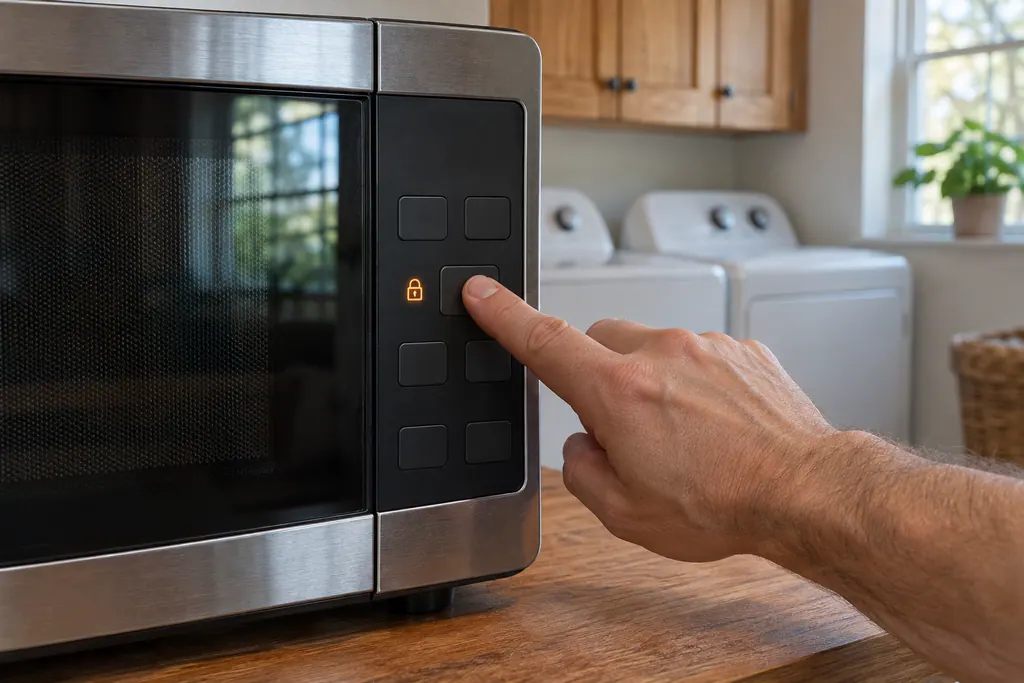
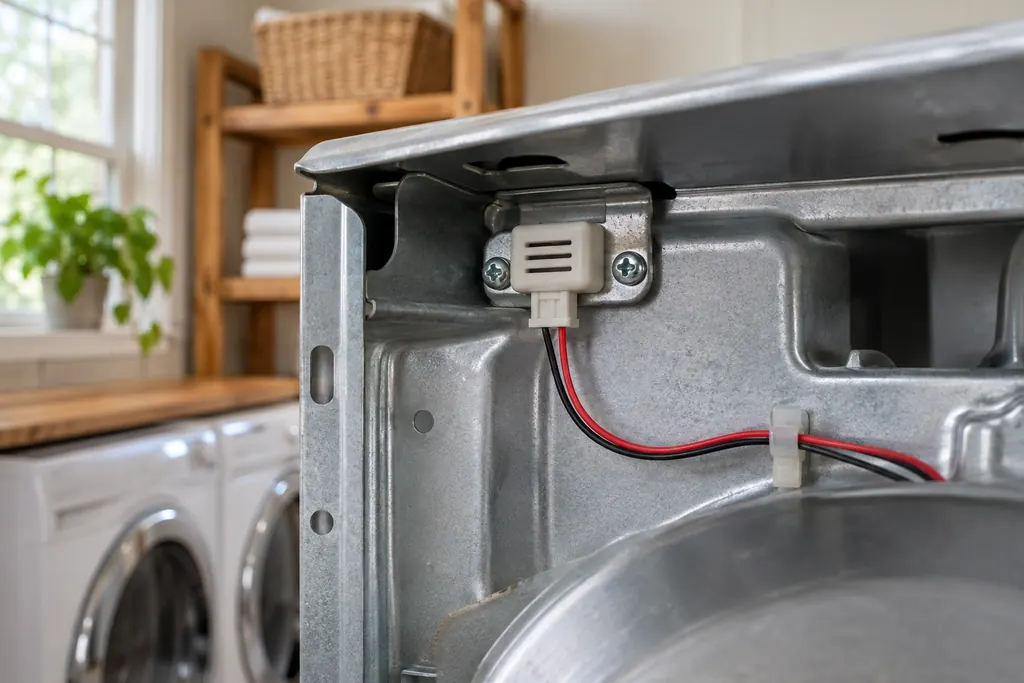
A rough sketch only, because a Maytag is laid out differently from model to model. Click a highlighted part to open its photo and the matching test.
There may be a problem with the convection thermistor or the associated wiring. The heading on the page reads F3.t2.
Read the supporting manualF3T1 names the user interface thermistor. F3T3 names the hood temperature thermistor. F3T4 names the magnetron temperature thermistor. F3T2 is the convection one.
Read the supporting manualThe page names the convection thermistor and its wiring but does not say what the microwave can still do.
Read the supporting manualIf the code stays away after the minute, the thermistor reading recovered; if not, a technician checks the part and wiring.
Read the supporting manualManufacturer document
Maytag Product Help (producthelp.maytag.com)
dateModified 2021-04-29; PH 10360 / PH 10360 (over-the-range microwave)
Manufacturer document
Maytag Product Help (producthelp.maytag.com)
dateModified 2021-04-29; PH 10359 / PH 10359 (over-the-range microwave)
Manufacturer document
Maytag Product Help (producthelp.maytag.com)
dateModified 2021-04-29; PH 10361 / PH 10361 (over-the-range microwave)
Manufacturer document
Maytag Product Help (producthelp.maytag.com)
dateModified 2021-04-29; PH 10362 / PH 10362 (over-the-range microwave)
Product Help lists no models for this entry; the page covers the over-the-range microwave tree. Source: Product Help PH 10360, with the F3T1, F3T3 and F3T4 pages.
That is how the page heading is printed, with a dot and a lowercase t. We keep it as printed, and your display may show it as F3T2, so read your own display carefully.
No. F3T2 names the convection thermistor. The hood temperature thermistor belongs to F3T3, the magnetron temperature thermistor to F3T4 and the user interface thermistor to F3T1.
No. Maytag gives no home test for it. The only home step on the page is the breaker reset, and the thermistor and its wiring are for a technician.
Maytag does not say. The page names the convection thermistor without saying which functions are affected, so tell us whether you use convection when you book.
Maytag codes, symptoms, parts and service
Maytag's over-the-range microwave page links F3T1 to the user interface thermistor or the wiring. It does not say which one, so run the reset below and schedule a visit if the code returns.
If a Maytag microwave will not start, the display usually explains why: a door message, the LOC padlock icon, or Demo Mode. Reopen and reclose the door first, then check the lock and demo settings before you book a visit.
Book a diagnostic for your model, done at the machine.
Office details, and the entry information to pass along.