On this page
- Steam from the door vent can condense into a floor spot once the door is open. 1
- Only dishwasher detergent belongs in the dispenser; dish soap makes suds that push water out. 12
- A dishwasher should be cleaned about every 30 days. 1
- The tub must sit level on its legs and square in the cabinet. 1
- A drip tray with water in it must be emptied; pull it gently because the float switch wire is attached. 3
Could the water by the door be plain steam?#
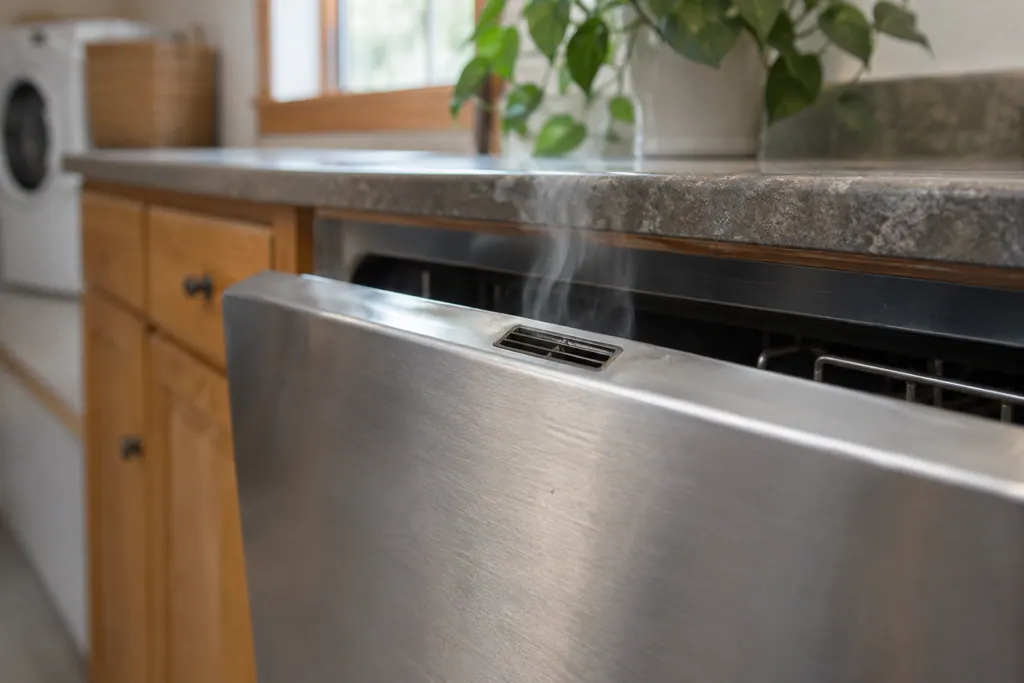
It may be steam. Maytag says vapor leaves a dishwasher by way of the door vent and can condense, leaving a damp patch on the floor once the door is pulled fully open. That heads its list for water at the door. 1
Wipe the floor dry, run a short cycle, and watch where the first drops land. A spot that appears only as the door opens points to condensation. A trail that begins along the lower door or its edges during the wash points to something else. A Maytag dishwasher is made to run every day, and a bit of damp from a hot cycle is part of that.
How do suds and soap cause water on the floor?#
Dish soap foams, whereas dishwasher detergent stays flat. Foam pressing outward can force water past the door and spoil the wash. Maytag says to power the machine down, give the suds time to disappear, and run only detergent made for dishwashers from then on. 1
Pre-washing can bring soap in by the back door. Residue from soaking or spraying dishes with dish soap or highly concentrated spray-on cleaners can foam up in the machine. Maytag says pre-washing is unnecessary: scrape off food, bones, toothpicks and other hard items, and load. 1
If foam is escaping now, Maytag lists a short routine on its page for water underneath: 2
- 1
- 2
- 3
- 4
- 5
- 6
What at the door seal and the tub can let water out?#
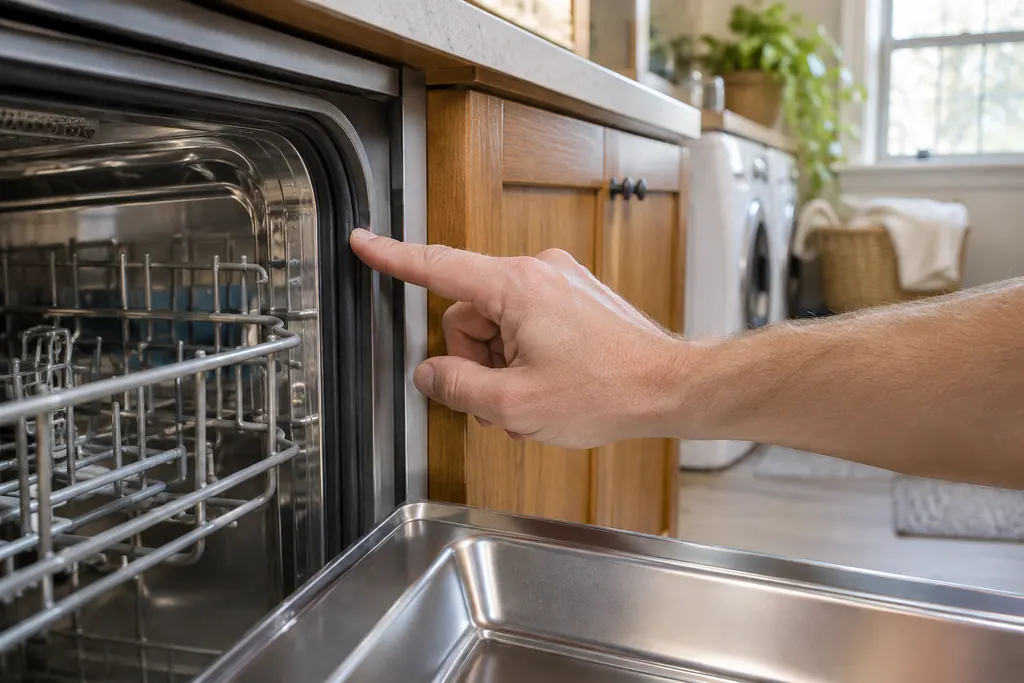
Check for objects between the door seal and the tub, such as silverware, large food particles, or an item sticking out of a rack. Then check the level, the square fit in the cabinet and the tub seal for cracks, tears or poor placement. 1
Maytag is specific on level: the dishwasher must be supported by its leveling legs or wheels flat on the floor, and square in the cabinet, or the door cannot seal. It adds that this is the responsibility of the customer or installer. Some models have four legs. 1
Cleaning plays a part too. Maytag says a dishwasher should be cleaned about every 30 days, and names affresh Dishwasher Cleaner as the monthly product. 1 Our drain system entry describes how water leaves the tub.
What about water under or behind the dishwasher?#
Two connections come first. For the water supply, check every connection point and make sure the rubber washer sits properly. For the drain line, check that the hose is correctly connected. After that, look for suds coming out. 2
Maytag gives details for the supply: slide the 3/4-inch fitting of the 90-degree elbow up to the valve and hand-tighten it so it does not cross-thread; check it with pliers; sealing the rubber gasket can need another 1/4 to 1/2 turn; route the fill hose out the rear left side. 23 The drain page it points to is called Drain Line Installation. 2
These are installation-grade connections under a built-in appliance. If you are not comfortable working under the unit, turn the supply valve off and book a visit rather than tightening blind.
What is the drip tray, and what does F8E4 do?#
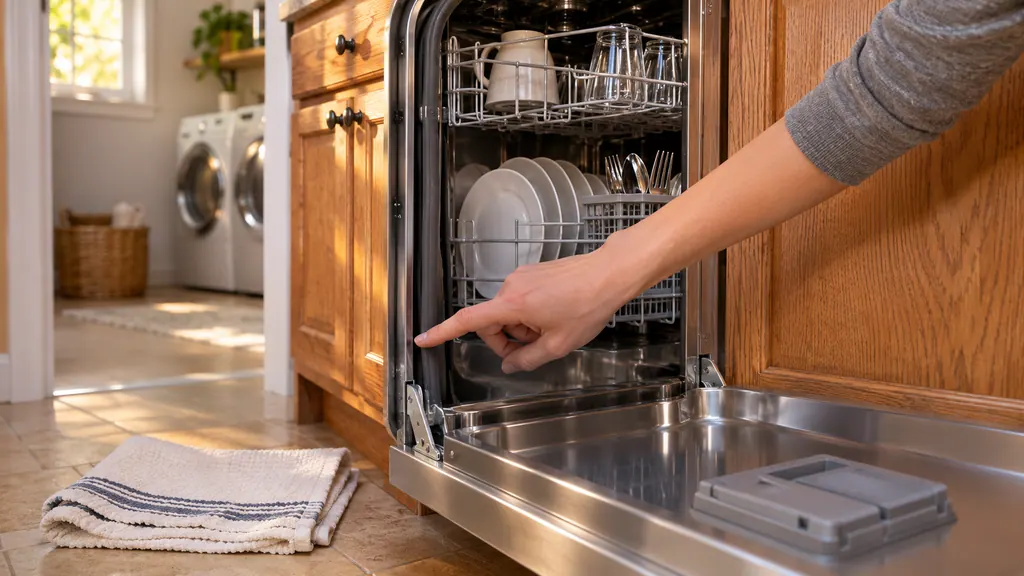
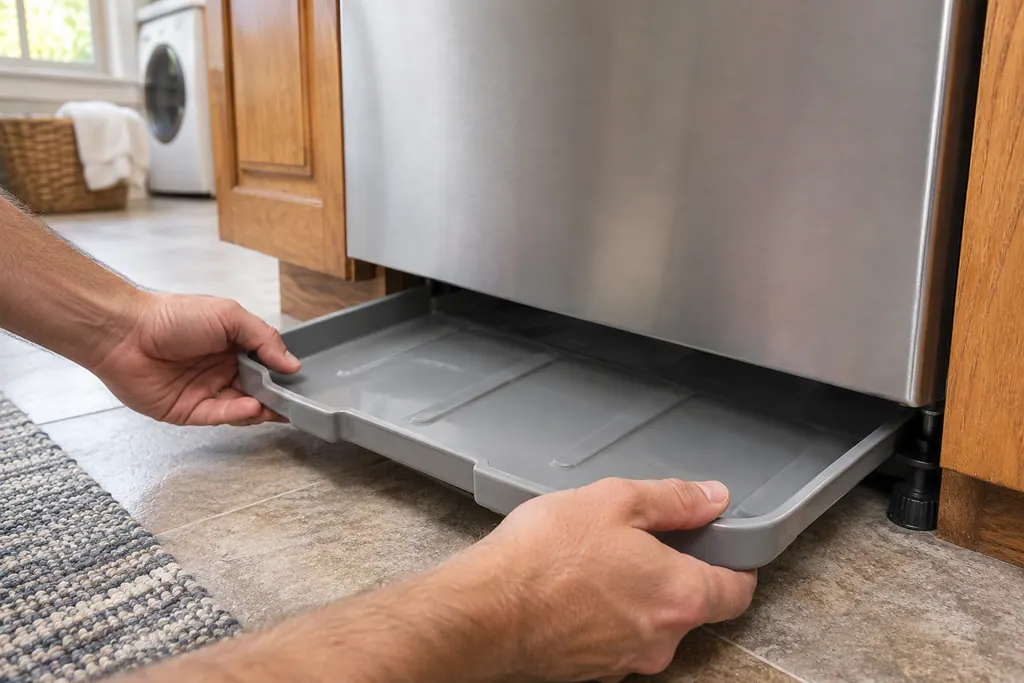
The drip tray is a plastic tray that collects water that escapes. Maytag's F8E4 page says that if you see water in it, it must be emptied. Release it by pressing the snap on each side toward the center and pulling toward you, gently, since the float switch wire is still connected. 3
For a newly installed dishwasher showing F8E4, the page lists: water seen, supply connected correctly, float switch connected, and drip tray emptied. To remove the code, press Cancel once to silence the tone, and again to clear it. 3
- 1
- 2
- 3
- 4
- 5
Our F8E4 page sets out what Maytag prints, including where its pages differ, and the float switch entry describes the part. We do not take F8E4 as this guide's subject: it is one cause among several.
Which spot points to which cause?#
Where the water first shows narrows the list. The table collects Maytag's three pages in one place, so you can read across from what you saw to what to check. 123
| Where it shows | Check first |
|---|---|
| Floor spot only as the door opens | Vent steam 1 |
| Foam or bubbles inside | Dish soap, pre-washed or soaked dishes, too much detergent 12 |
| Drips along the door edge | Items in the door seal, rack items sticking out, level and square fit, tub seal 1 |
| Water underneath or behind | Supply connection and rubber washer, drain line connection 2 |
| Water in the plastic tray, possibly a code | Empty the tray, check the float switch connector 3 |
Tackle one row at a time and run a short cycle after each change, with a dry towel on the floor so any new drop is easy to see. A Maytag dishwasher that has served for years usually leaks for an ordinary reason, and the ordinary reasons are all on this list.
Scrape plates rather than rinsing them under a spray of dish soap, load so nothing blocks the door, and run the monthly cleaner. Those three habits remove most of the first four rows. 1
What helps the technician?#
Report the spot where water first shows, how soon after the start, which detergent you use, whether the load was pre-washed, and whether F8E4 showed. Say whether the unit is new and who installed it.
- At the door, base or back?
- Foam or clear water?
- Level and square in the cabinet?
- Water in the drip tray?
Find the Maytag dishwashers we work on at the dishwasher repair page.
Sources#
- Leaking from Door - Product Help | MaytagMaytag Product Help (producthelp.maytag.com) · retrieved 2026-11-11 · article text: vent, dish soap, pre-washing, cleaning, door seal items, level, tub seal
- Leaking - Underneath - Dishwasher - Product Help | MaytagMaytag Product Help (producthelp.maytag.com) · retrieved 2026-11-11 · article text: water supply connection, drain line, suds
- F8E4 - Dishwasher - Product Help | MaytagMaytag Product Help (producthelp.maytag.com) · PH 12632; dateModified 2026-06-15 · article text: newly installed, drip tray, float switch, Remove the Code, suds