On this page
- Keep the washer somewhere freezing cannot reach it. 12
- Winterize if you store or move it in freezing weather. 12
- The antifreeze is R.V.-type, 1 quart, followed by RINSE & SPIN for about 30 seconds. 12
- A front-load move needs new transport bolts, the washer upright and both hoses inside the drum. 3
- Maytag's pages name different clearing cycles: Bulky/Sheets and Deep Water Wash, or Heavy Duty. 123
Why does freezing matter for a washer?#
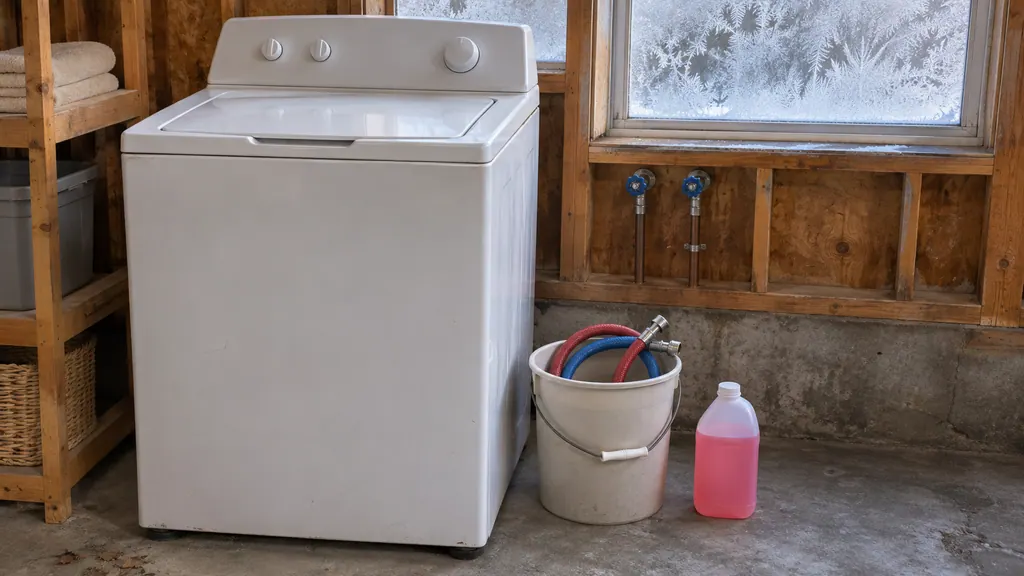
Even after a cycle ends, some water stays in the hoses, and ice can crack parts that were never meant to expand. Maytag's winter-storage pages say to keep a washer out of freezing spaces, and to winterize it whenever it is stored or moved in freezing weather. 12
That includes the quiet ways a washer meets cold: a vacation cottage, a garage laundry corner, a basement with a failing furnace, a truck bed in January. The idea is to treat a washer like a household pipe and keep it from sitting full of water in the cold. Maytag washers earn their reputation by running year after year, and a few minutes of preparation keeps a cold snap from shortening that run.
How do I winterize it, step by step?#
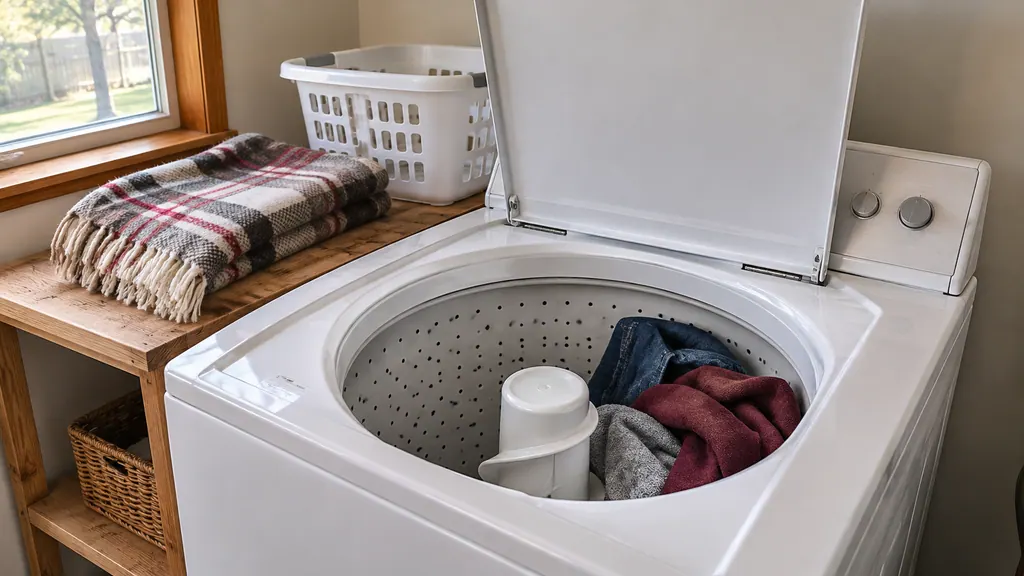
Close both water faucets, detach the inlet hoses and let them empty, pour 1 quart of R.V.-type antifreeze into the basket, run RINSE & SPIN for about half a minute so it blends with the water left inside, and unplug the washer. 12
- 1
- 2
- 3
- 4
- 5
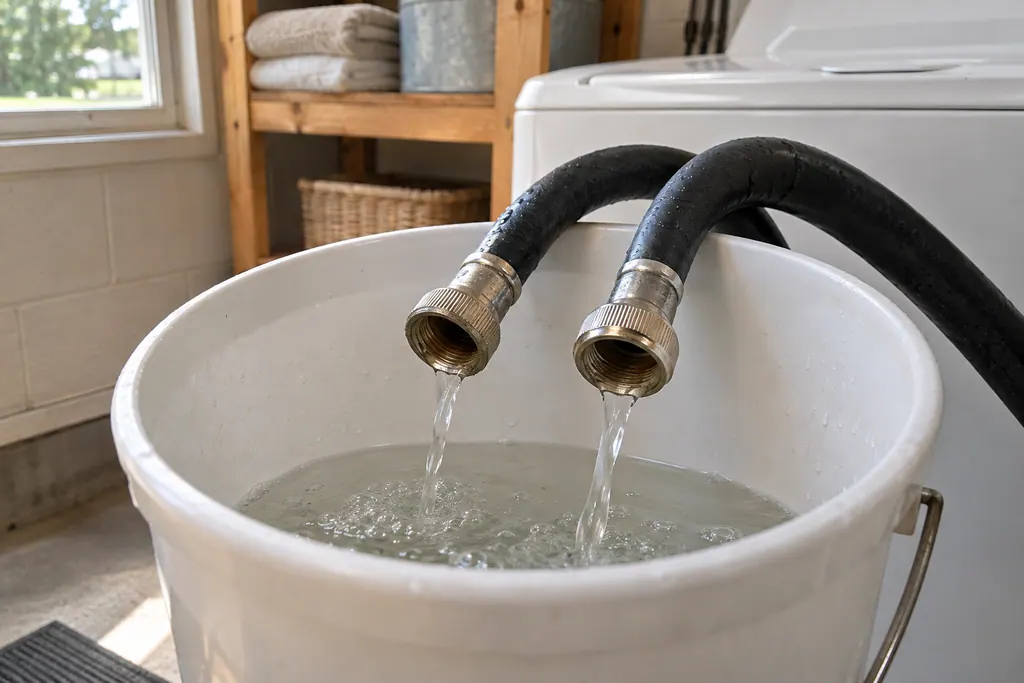
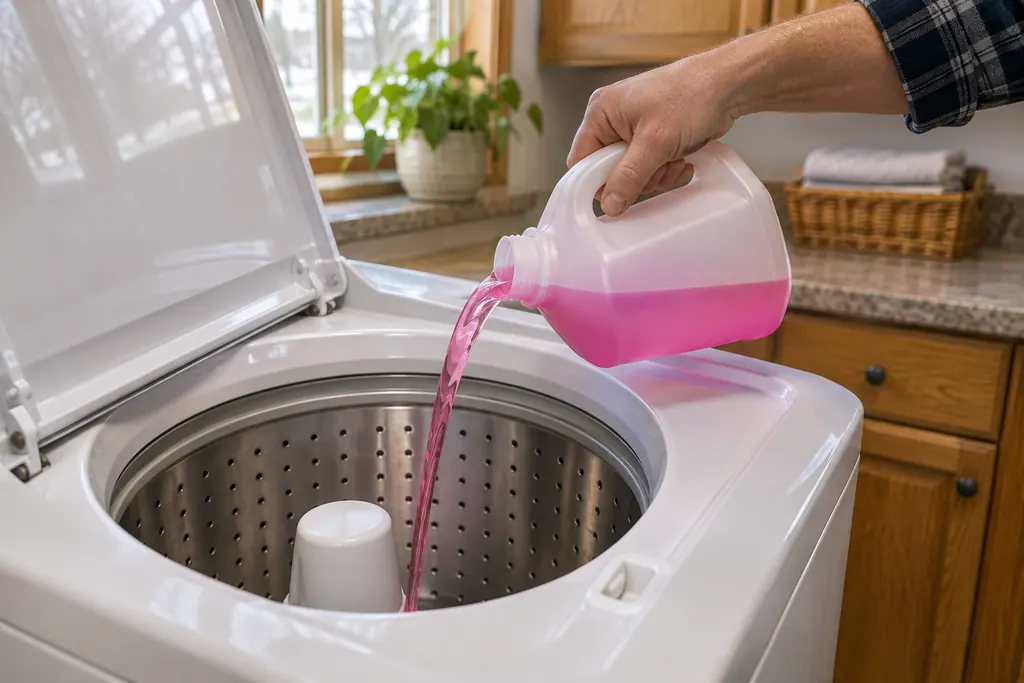
The wording on the top-load and front-load pages is almost the same, so the procedure holds for either kind of Maytag washer. The only extra is on the moving page, which adds a few steps for a front-loader. 3
What changes when I am moving a front-load washer?#
Beyond the winterizing steps, the moving page adds: detach the drain hose at the drain and at the back of the washer, unplug the cord, place the inlet and drain hoses inside the drum, and bundle the cord with a rubber band or cable tie so it does not hang to the ground. 3
It also gives two firm warnings. Do not reuse transport bolts: new ones are needed. And the washer must be transported upright, since the structure can be damaged otherwise. Maytag's page says the washer should be set up for relocation by a technician, and asks for service to fit the new bolts. 3
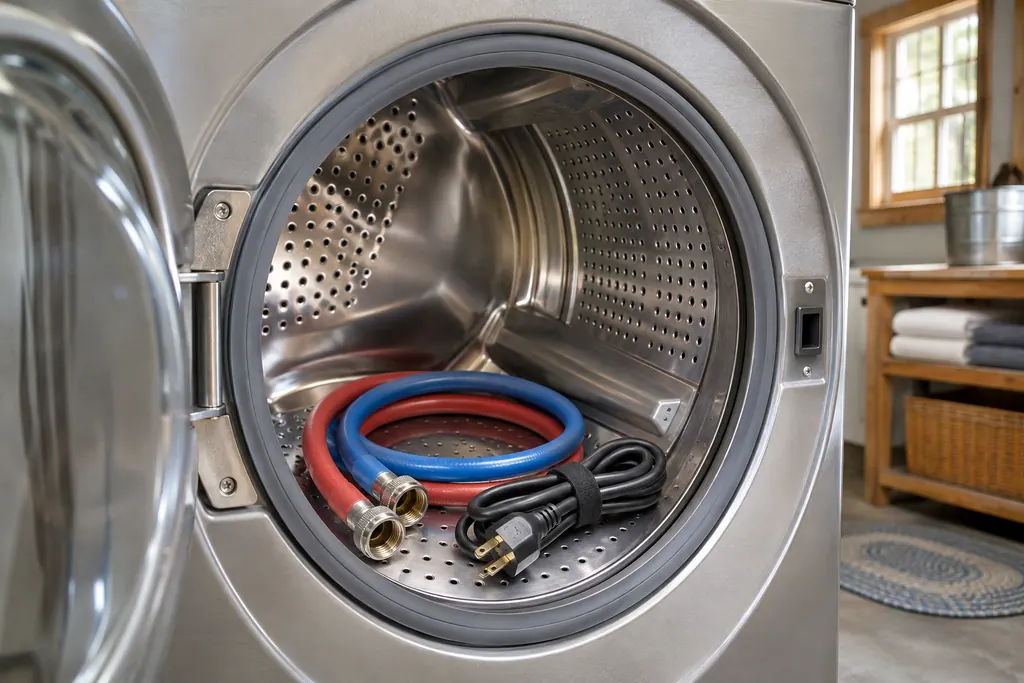
If you are planning a move and want the bolts fitted properly, you can arrange a visit with the model and the date ready. The washer repair page shows what we work on. We cannot promise the exact bolt procedure for your model until we see it.
How do I put the washer back to work?#
Reinstall following the installation instructions to locate, level and connect it. Then rinse through the supply pipes and hoses, reattach the inlet hoses, open both faucets, plug in the machine, and start a cleaning cycle to clear any antifreeze, with HE detergent at half the usual dose for a medium load. 123
Maytag's own pages name different cycles for that last run, and we show both rather than choose for you. The two winter-storage pages say Bulky/Sheets and Deep Water Wash. The moving page for a front-loader says Heavy Duty. 123 Pick whichever your washer's panel offers, and check your Owner's Manual if neither appears.
- 1
- 2
- 3
- 4
- 5
Watch the hoses, faucets and drain during that first cycle. A weep at a hose coupling is much easier to deal with while you are standing there. If water collects around the washer, our drain hose entry and leaking washer page list the usual places.
Which Maytag page applies to my washer?#
There are three, and they overlap. Top-load owners have one winter-storage page; front-load owners have a winter-storage page and a moving page. The winterizing steps are the same on both winter-storage pages, so either kind of washer follows the same five steps. 12
The moving page is written for front-load washers only. We found no matching Maytag page for transporting a top-load washer, so for that case we can offer only the winterizing steps and the reinstalling routine, not transport instructions. 13
What do these pages leave unsaid?#
They name no temperature at which to winterize and no length of storage that triggers it; they speak of freezing weather and of storing or moving in it. They do not mention dryers or other appliances, and they do not name the antifreeze by brand, only its type. 123
So the safest reading is the plain one. If the room can freeze, winterize. If you are unsure whether it can, winterize anyway, since the cost is one quart of antifreeze and a few minutes.
Does storing a front-load washer affect the door seal?#
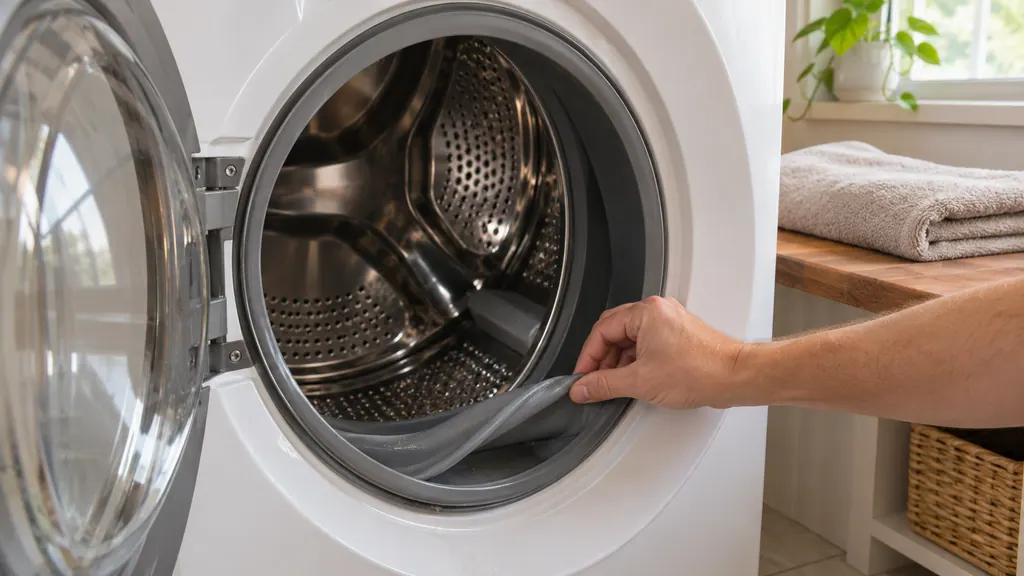
Maytag's winter-storage pages do not address the seal, so we say little. A washer that sits for months with the door shut is a reason to look under the seal when it returns, since Maytag asks owners to inspect that area monthly in normal use. 4
Our door seal guide covers the inspection and the dilute bleach routine from Maytag's cleaning page. Leaving the door open so the drum can air dry is Maytag's advice after cleaning the seal. 5
Which details help the technician?#
Say whether the washer is top-load or front-load, how long it was stored, what temperature the room reached, whether you used antifreeze, and what happened on the first cycles back in service. If a move is coming, give the date and the distance.
- Top-load or front-load, and the model number?
- How long in storage, and was it unheated?
- Antifreeze added, and which cycle cleared it?
- Any leak, noise or code on the first run?
- Are new transport bolts needed for a move?
Sources#
- Winter Storage Care - Washer - Product Help | MaytagMaytag Product Help (producthelp.maytag.com) · retrieved 2026-11-12 · article text: Winterizing a Washer; Reinstalling the Washer (top-load tree)
- Winter Storage Care - Front Load Washer - Product Help | MaytagMaytag Product Help (producthelp.maytag.com) · retrieved 2026-11-12 · article text: Winter storage care; Reinstalling and using washer again
- Moving a Front Load Washer - Product Help | MaytagMaytag Product Help (producthelp.maytag.com) · retrieved 2026-11-12 · article text: Transporting your washer; Reinstalling and using washer again
- Water Remains in Door Seal (Bellows) - Front Load Washer - Product Help | MaytagMaytag Product Help (producthelp.maytag.com) · retrieved 2026-11-11 · article text, monthly inspection of the bellows area
- Cleaning the Door Seal - Front Load Washer - Product Help | MaytagMaytag Product Help (producthelp.maytag.com) · retrieved 2026-11-11 · article text, Cleaning the Door Seal (bellows)